Why Asakusa earns a place in a Tokyo trip
Asakusa packs three quite different things into one short walk: a huge red lantern hanging in a temple gate, a temple hall with a tall, steeply sloping roof, and a shopping street lined with traditional goods and snacks. You can see all three on foot in a single morning or afternoon, without booking anything.
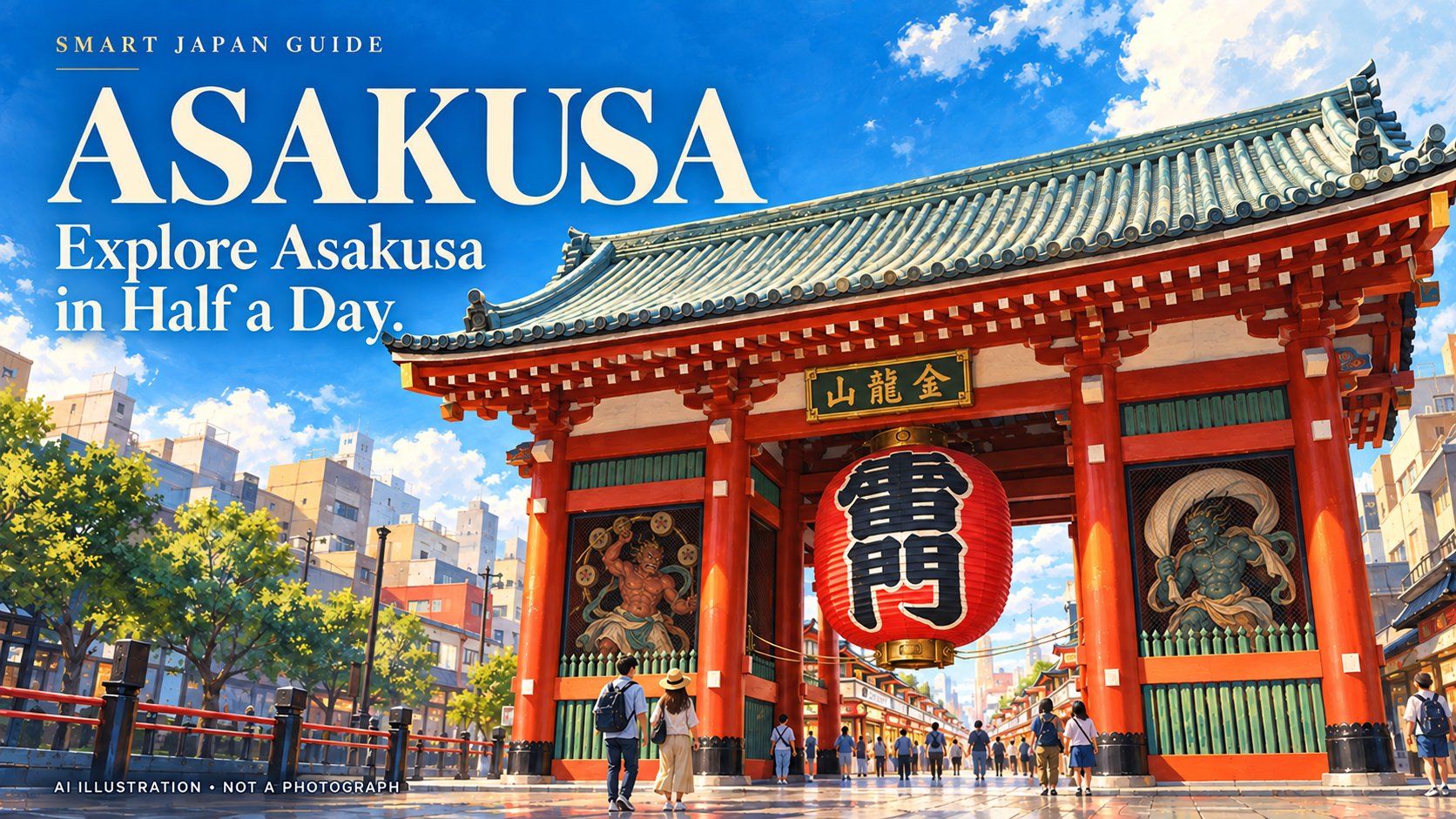
1. A landmark gate to start with. Kaminarimon is the main gate of Senso-ji, a recognizable Asakusa entrance and photo landmark. Look up at the large red lantern, then look underneath it: there is a dragon carved into its base. On either side stand guardian figures of wind and thunder. The gate you see today was rebuilt in 1960.
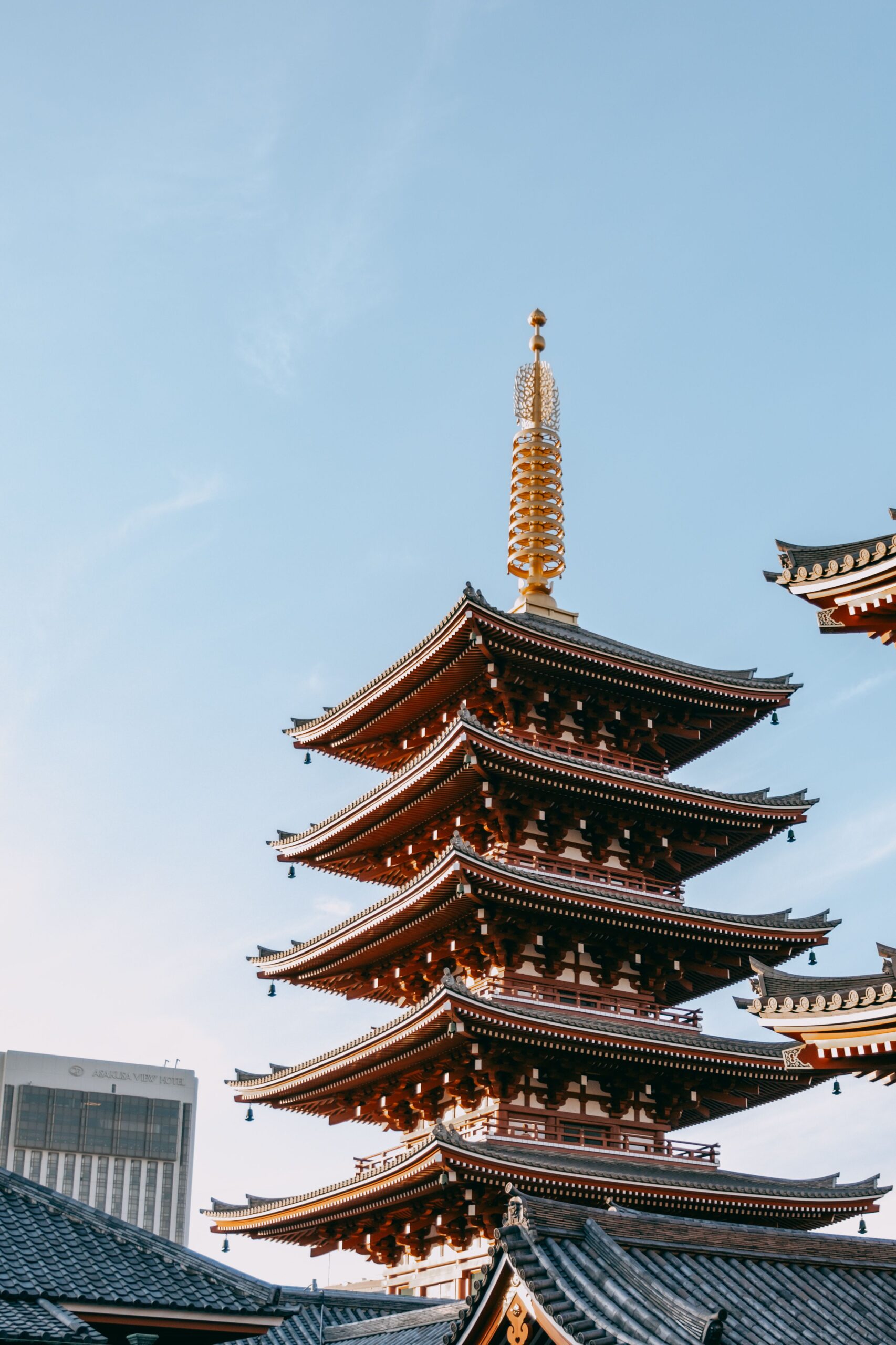
2. Temple architecture you can take in from outside. Senso-ji describes itself as Tokyo’s oldest temple. Its Main Hall, rebuilt in 1958, stands out for its tall, steeply sloping roof, and the precinct also holds a five-story pagoda. This walk views the pagoda from the outside only. Basic entry to the temple grounds is free.
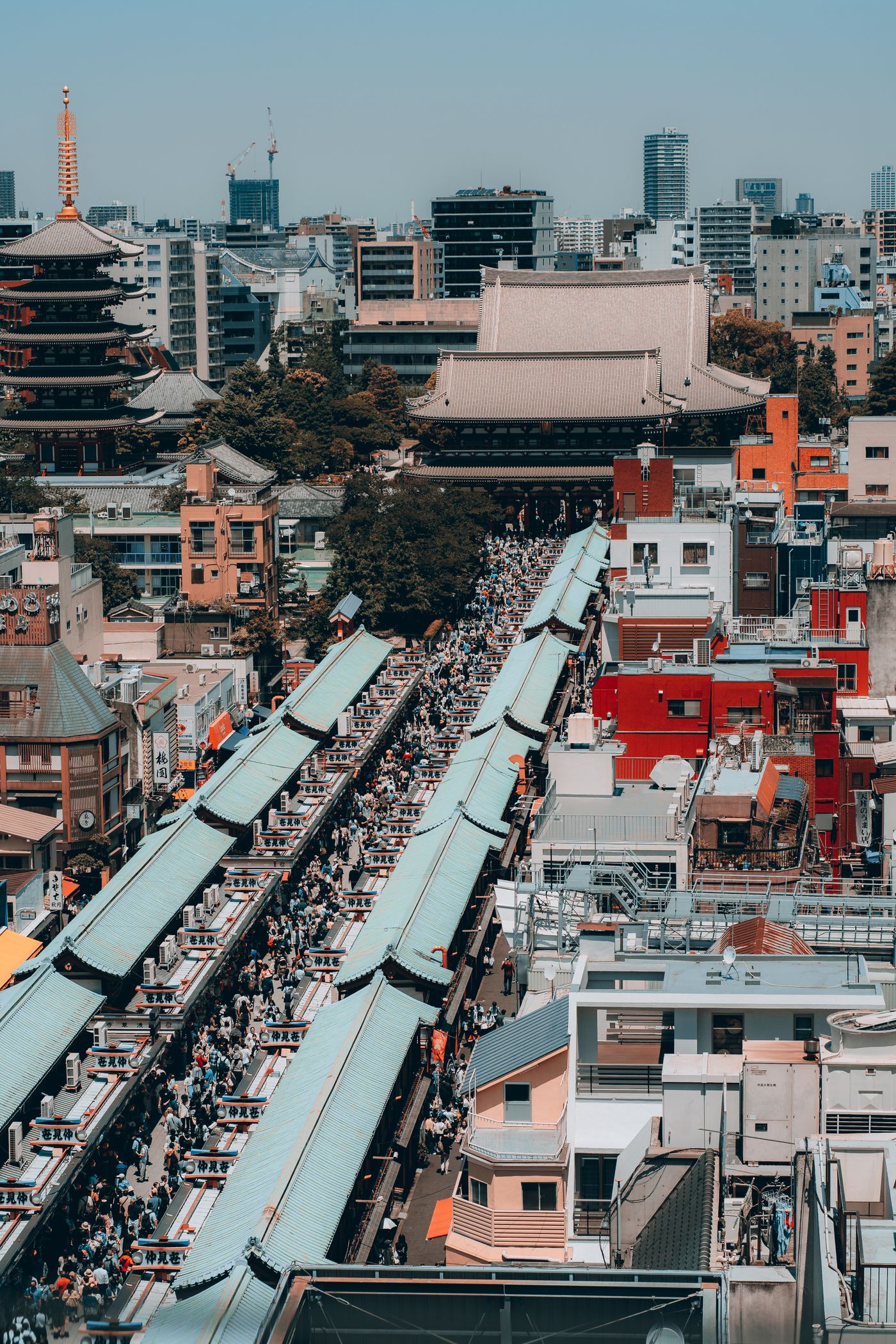
3. A shopping street with a clear purpose. Nakamise runs between Kaminarimon and the Hozomon gate. Its shops sell souvenirs, traditional toys, cakes and other snacks, so it suits browsing rather than hunting for one particular item.
Is this walk for you?
It suits you if you enjoy temple architecture, like browsing everyday shopping streets, and want a manageable walk that fits into half a day. It is a self-guided route, so there is nothing to reserve.
The trade-offs are worth knowing before you go. Nakamise shops keep their own hours, so an early start that suits the temple may mean some shutters are still down. The precinct is a place of worship as well as a sight, so give people who are praying room and follow any posted rules. And if you need step-free access, the lift information below covers the Main Hall area, not the whole walk.
The core walk: what to notice and what to decide
The route is described by landmarks rather than turn by turn. Follow current signs and any diversions on the day.
1. Kaminarimon. Notice: the red lantern, the dragon carving at its base and the wind and thunder figures on either side. Decide: whether to take your gate photo now or on the way back out, and how long to linger before moving on.
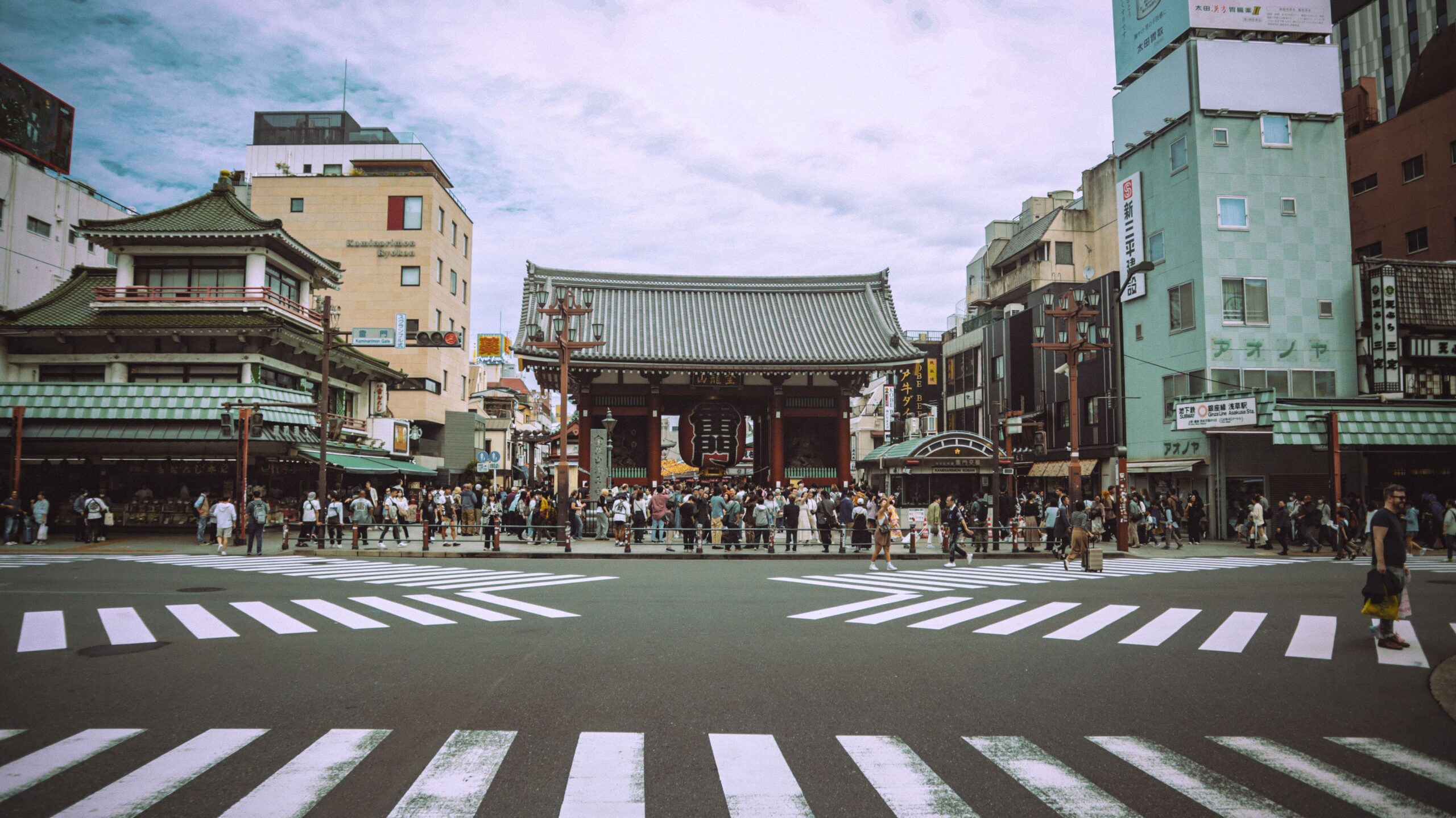
2. Nakamise. Notice: the mix of souvenirs, traditional toys, cakes and snacks between the two gates. Decide: browse now, or walk through to the temple first and shop on your return. Opening hours vary from shop to shop, so on an early visit the return trip is often the better time to browse.
3. Hozomon, the Main Hall and the pagoda. Notice: the Main Hall’s tall, steeply sloping roof, and the five-story pagoda, seen from outside. The temple’s principal image is normally hidden from view, so don’t plan around seeing it. Decide: whether you want to worship or simply look at the buildings. If you plan to worship, the temple’s FAQ is the place to check its guidance.
4. Back south to Denboin-dori. Retrace your steps south to Denboin-dori, the street that crosses the approach. Denboin-dori is an ordinary street; the Denboin garden it is named after is closed to the public, so don’t expect garden admission.
5. West toward Rokku (flexible). From Denboin-dori, head west toward Rokku and its side streets. This part of the core is flexible browsing time, not a checklist: wander as much or as little as your schedule allows. If you would rather stay nearer the temple, Shin-Nakamise, which runs farther south, is a shorter alternative.
6. Eat, rest and choose your finish. Take a meal or rest break. Ending in western Asakusa makes sense if you plan to continue to Kappabashi, but decide which rail line you need onward before heading for the nearest western station.
Planning the half day
Core estimate: about three to four hours. This is an editorial planning model, not a tested or guaranteed walking time. It covers local walking, moderate browsing, a meal or rest and getting oriented. It does not cover travel to Asakusa, long queues, appointments or the optional Kappabashi extension.
| Part of the core | Allowance |
|---|---|
| Kaminarimon and Nakamise | 35–50 min |
| Hozomon, Main Hall and pagoda exterior | 40–55 min |
| Denboin-dori and western side streets | 25–40 min |
| Meal or rest | 40–50 min |
| Transfers, orientation and spare time | 40–45 min |
| Core total | 180–240 min |
The spare-time block is an estimate, not guaranteed slack: queues, slow crossings or a longer rest can use it up. Adding Kappabashi (60–90 minutes) brings the total to about four to five and a half hours.
Choose your start. – Shopping-balanced daytime start: arriving around 09:30 to 10:00 is a suggestion, not a promise that every shop will be open. – Temple-first early start: the Senso-ji Main Hall is open 06:00 to 17:00, opening at 06:30 from October to March. These hours apply to the Main Hall, not to shops or every building in the precinct. Go to the temple first and browse Nakamise on the way back. The trade-off is waiting for shops to open and walking some of the same ground twice.
If the clock runs short. – Only two hours: keep the temple and one shopping segment. Drop the optional extension and any long, seated meal. – Delayed or stuck in a queue: use whatever is left of the spare-time allowance first, then cut extra shopping. Don’t rush the temple or skip your rest. – Rain or heat: shorten the outdoor stretch and take a rest break. Don’t assume continuous shelter along the route.
Optional extension: Kappabashi
Kappabashi is the district known for cookware, tableware and food models. If browsing kitchenware, tableware or food models appeals to you, it is a natural add-on; if not, skip it without missing anything in the core walk.
It is within walking distance of Senso-ji. The district association’s access page estimates about five minutes on foot from Tawaramachi station on the Ginza Line to the district. Walking times vary by shop, so pick a specific shop as your destination. Allow roughly 60 to 90 extra minutes for selected browsing and orientation, not exhaustive shopping.
Check before you go:
- Opening days. Shops set their own holidays. According to the district association’s FAQ, most open on Saturdays and about 30 percent open on Sundays. If shopping matters, a weekday or Saturday is the safer choice, and check your chosen shops either way.
- Who can buy. The association says almost all shops sell to individual customers, so you don’t need to be a trade buyer. Individual shops still decide their own opening and stock.
If the Ginza Line suits your onward journey, finishing near Tawaramachi is a sensible end point.
Practical details
Getting there. The stations are not interchangeable, so check which line you are arriving on. The Nakamise shopping association’s map estimates about 10 minutes from Tsukuba Express (TX) Asakusa station to Nakamise, and about 3 minutes from the Tokyo Metro Ginza Line, Toei Asakusa Line and Tobu Isesaki Line. Those are the association’s estimates to Nakamise. Rather than rely on exit numbers, follow signs toward Kaminarimon.
Costs. Basic entry to Senso-ji is free, but the day is not zero-cost: shopping, food and transport are separate.
Accessibility. The Main Hall has a lift, on the left as you face the hall. Multipurpose toilets are to the right of Hozomon and behind the Main Hall. This information covers the Main Hall area only; don’t treat the whole walk as step-free.
Local manners. Take your rubbish with you or use a bin, and smoke only in designated areas (Taito City guidance, updated 1 October 2026). Where to eat is up to each vendor, so ask and follow posted signs. Posted photography rules take precedence.
Events and closures. Before you go, check Senso-ji’s monthly event notice and news page for anything that could affect your visit.
Your next step. Pick your start time and arrival line, then check the official pages linked above for current hours and access close to your visit date. For an overview of the temple and its buildings, see the Senso-ji English site.
Quick answers
Do I need to book anything? No. This is an independent walk, and basic entry to the temple is free.
Is three hours enough? It is the lower end of the core planning estimate above, which excludes Kappabashi. It is not a guarantee.
Can I visit early? Yes. The Main Hall opens at 06:00, or 06:30 from October to March. Shops open on their own schedules.
Can I go inside the pagoda or see the principal image? This walk views the pagoda from outside only, and the principal image is normally hidden from view.
Which Asakusa station should I use? It depends on your line. By the Nakamise association’s estimates, TX Asakusa is a longer walk to Nakamise than the Tokyo Metro Ginza Line, Toei Asakusa Line and Tobu Isesaki Line.
Is Kappabashi included? No. It is an optional extra that takes the total to roughly four to five and a half hours.
Does Denboin-dori mean I can enter the garden? No. Denboin-dori is a street, and the Denboin garden it is named after is closed to the public.
Sources
Senso-ji (English site, FAQ, monthly notice and news page); GO TOKYO spot pages for Kaminarimon, Senso-ji and Nakamise; Nakamise shopping association map; Kappabashi association FAQ and access page; Taito City manners guidance. Official pages were checked on 14–15 October 2026. The pages you are most likely to need before your visit are linked in the sections above.


Comments